
Change management in construction technology is the structured discipline of identifying, documenting, and integrating modifications to project scope, workflows, and digital tools so that work continues without costly disruptions. Construction project change management covers everything from a field supervisor switching time-tracking software mid-project to a general contractor revising safety compliance protocols across multiple trades. When project managers skip this process, disputes escalate, budgets blow out, and crews lose confidence in leadership. Understanding what is change management construction tech means recognizing it as a commercial discipline, not just an administrative task, and treating every change as something that requires formal handling from day one.
What is change management in construction tech?
Change management in construction technology is the process of controlling how modifications to tools, workflows, and project scope are identified, communicated, approved, and closed out. The industry term for this practice is “construction change management,” and it covers both contractual processes and operational workflows. Change management is a commercial discipline that directly controls cost, schedule, and risk exposure on every project.
Most project managers understand change orders at a surface level. What separates high-performing teams is treating every instruction, RFI response, and field directive as a potential contractual record. A verbal instruction from an owner’s representative, for example, can trigger real cost exposure. Without a formal process to capture it, that cost becomes your problem, not theirs.

The scope of change management in construction tech has expanded significantly as digital tools have entered the field. Switching from paper logs to a field operations platform like Debecorp’s CHERP affects daily workflows, reporting chains, and how crews document safety compliance. Each of those shifts requires the same structured approach you would apply to a scope change on the contract itself.
What are the main change management techniques in construction tech?
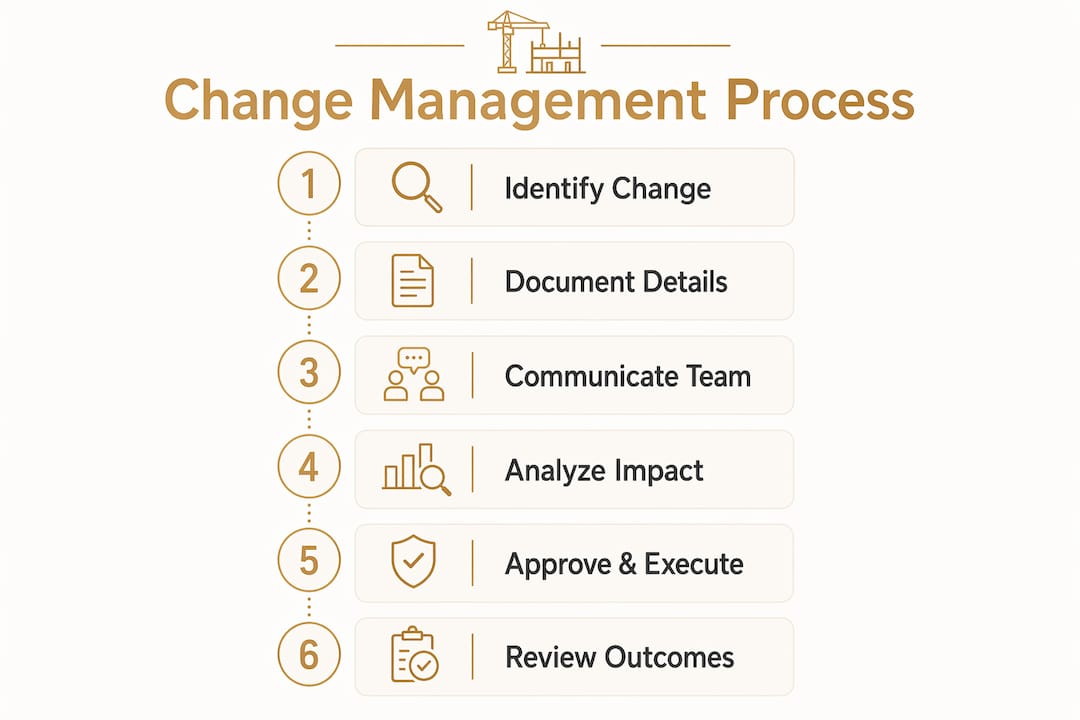
Construction teams that manage change well use a consistent set of techniques. These methods apply whether the change involves a new digital tool, a revised drawing set, or a modified work sequence.
- Early identification and documentation: Capture every change at the moment it surfaces. Record the source, the date, the affected drawings or systems, and the potential labor and schedule impact. Treating RFIs and field instructions as contractual records from day one prevents memory-based disputes later.
- Formal notice before work starts: Issue written notice immediately upon identifying a change. Securing written amendments before performing any work protects your legal rights and cash flow. Starting work on a verbal promise is one of the most common ways contractors lose money.
- Structured communication channels: Assign clear lines for who communicates changes, to whom, and in what format. Centralized platforms that push real-time jobsite updates reduce the risk of field teams acting on outdated information.
- Project champions for tech adoption: Assign respected field leaders to actively use new tools and demonstrate their value to peers. Rotating project champions prevents burnout and builds trust across the crew, which is far more effective than top-down mandates.
- Impact tracking: Assess every change for its effect on cost, schedule, and productivity before approving it. This creates an audit trail and supports accurate forecasting.
Pro Tip: Assign one person per project to own the change log. That person’s job is to update it in real time, not at the end of the week. A stale log is almost as dangerous as no log at all.
Why is change management critical for successful construction tech adoption?
The biggest barrier to technology adoption in construction is not the technology itself. It is the failure to manage the human and operational changes that come with it. Field teams need to understand how changes solve specific problems rather than just being told what is changing. When leadership communicates the “what” without the “why,” resistance builds fast.
“Urgency should bring clarity and support, not force compliance. When project leaders push new tools without explaining the benefit to the crew, adoption stalls and resentment builds. The technology is rarely the problem.”
Three specific failure patterns show up repeatedly on construction projects:
- Change fatigue: Crews absorb too many changes at once, especially during peak production phases. Stacking a new field app rollout on top of a schedule compression creates friction that kills adoption.
- Mixed leadership signals: A superintendent who uses the old paper system while telling crews to use the new digital platform sends a clear message. Crews follow behavior, not instructions.
- Software-first implementation: Deploying software without workflow adaptation and dedicated training leads to low adoption rates. Crews prioritize immediate production over learning a new system if no one supports the transition.
Structured change management addresses all three. It forces leadership to align before rollout, paces the change to match operational reality, and builds in training time as a non-negotiable project resource. Adaptive capacity in managing change is a strong predictor of project governance success, with research showing a standardized coefficient of 0.349 for change management as a critical success factor for Project Management Offices in construction. That number reflects how directly your change management capability connects to overall project performance.
How do formal documentation and contract amendments reinforce change management?
Most construction claims trace back to weak documentation practices. The difference between a recoverable cost and an unrecoverable loss often comes down to whether someone wrote it down at the right time.
Four types of change-related records carry different weight on a project:
- Informal instructions: Verbal or email directives that have not been formally incorporated into the contract. These create exposure without protection.
- RFIs (Requests for Information): Clarification requests that can carry contractual implications if the response directs additional work or changes the scope.
- Change orders: Formal written amendments that adjust the contract price, schedule, or scope. These are the only fully protected form of change instruction.
- Claims: Disputes that arise when changes were performed without formal agreement. Claims are expensive, slow, and often avoidable.
| Record type | Contractual protection | Best use |
|---|---|---|
| Verbal instruction | None | Never rely on this alone |
| RFI response | Partial | Document and follow up in writing |
| Change order | Full | Required before starting changed work |
| Claim | Retroactive | Last resort after a dispute |
Pro Tip: When you receive a field instruction that changes scope, send a written confirmation within 24 hours. Even a simple email stating “confirming your direction to do X” creates a record that protects you if the issue escalates.
Failing to document change instructions and their origins can cause unrecoverable losses. Memory-based claims are rarely enforceable in arbitration or litigation. The project team that wins disputes is almost always the one with the better paper trail, not the better argument.
Closing out changes before the project ends is equally critical. Unresolved change orders become claims. Claims become litigation. A disciplined closeout process, where every open item gets a signed resolution before the final billing cycle, protects everyone on the project.
What practical steps can construction teams take to implement change management?
Implementing effective change management during a tech rollout or project execution requires deliberate setup at the start, not reactive fixes in the middle.
- Set protocols at kickoff: Define how changes will be identified, communicated, and approved before the project starts. Every team member should know the process before work begins. Reducing miscommunication on the jobsite starts with clear rules established early.
- Involve field and office leaders together: Change management fails when it is designed in the office and handed down to the field. Bring superintendents, foremen, and project engineers into the process from the start.
- Dedicate time for training: Schedule hands-on training sessions as a line item in the project plan. Crews that practice with new tools in low-pressure settings adopt them faster and with fewer errors.
- Rotate project champions: Assign respected field leaders to champion new tools or processes, then rotate that role every few weeks. This spreads ownership and prevents any one person from becoming the bottleneck.
- Centralize documentation: Use a single platform for change logs, daily reports, and communications. Centralizing construction team updates eliminates the information silos that cause disputes and delays.
- Monitor leadership consistency: Check regularly that supervisors at every level are using the agreed processes. Address inconsistency directly and quickly. One leader reverting to old habits can unravel weeks of progress.
The teams that execute this well treat change management as an ongoing leadership practice. They revisit the process at every phase transition, not just at the start of the project.
Key Takeaways
Effective construction change management is a commercial discipline that requires formal documentation, consistent leadership, and structured communication to protect project costs and drive technology adoption.
| Point | Details |
|---|---|
| Define it as a commercial discipline | Change management controls cost, schedule, and risk, not just administrative paperwork. |
| Issue formal notice immediately | Secure written amendments before starting any changed work to protect legal and cash-flow rights. |
| Communicate the “why” to field teams | Teams adopt new tools faster when they understand the specific problem the change solves. |
| Rotate project champions | Spreading ownership across respected field leaders builds peer trust and prevents burnout. |
| Close out changes before project end | Unresolved change orders become claims; resolve every open item before the final billing cycle. |
The part most project managers skip
The most common mistake I see in construction tech rollouts is treating change management as a one-time event. A team holds a kickoff meeting, rolls out the new platform, and then moves on. Six weeks later, half the crew is still using the old system, and the project manager is wondering why adoption stalled.
Change management is a leadership practice that runs for the life of the project. The teams that get it right check in constantly. They ask field leaders what is working and what is not. They adjust the training approach when something is not landing. They address the superintendent who is quietly undermining the new process before it becomes a cultural problem.
The other thing I have learned is that pacing matters more than most people admit. Pushing a major tech change during peak production is almost always a mistake. Pacing change with operational realities and maintaining leadership consistency are what separate successful rollouts from expensive failures. Pick the right moment, build in real support, and treat resistance as information rather than obstruction.
— SEAN
How Debecorp supports change management on the jobsite
Construction teams need tools that match the way they actually work, not platforms designed for office environments and retrofitted to the field. Debecorp builds CHERP and SiteComm from the ground up with input from tradespeople who understand the daily pressures of jobsite operations.

CHERP handles time and attendance, daily logs, and safety compliance in one place, giving project managers a single source of truth for field activity. SiteComm keeps communication structured and documented, so change instructions do not get lost in text threads or verbal exchanges. Both platforms support the kind of disciplined record-keeping that protects your contractual rights and drives real adoption. Explore CHERP and SiteComm to see how Debecorp’s field software fits your trade and your workflow.
FAQ
What is change management in construction technology?
Change management in construction technology is the structured process of identifying, documenting, and integrating modifications to project scope, workflows, and digital tools. It functions as a commercial discipline that controls cost, schedule, and risk on construction projects.
Why do change management efforts fail in construction?
Change efforts most often fail because leadership communicates what is changing without explaining why it matters to the crew. A software-first rollout without dedicated training and workflow adaptation also drives low adoption rates.
What should be documented when a change is identified?
Capture the source of the change, the date it was identified, the affected drawings or systems, the estimated labor impact, and the schedule effect. Treating this record as a contractual document from day one prevents disputes later.
How do project champions improve tech adoption?
Project champions are respected field leaders who actively use new tools and demonstrate their value to peers. Rotating the champion role prevents burnout and builds broader ownership across the crew.
When should a change order be issued?
A change order should be issued and signed before any changed work begins. Starting work on a verbal instruction without a written amendment removes your contractual protection and creates cash-flow risk.