
Construction workforce planning is the process of aligning the right workers, skills, and roles with project demands at the right time and cost. Done well, it directly controls labor costs, prevents schedule blowouts, and keeps quality consistent from groundbreaking to closeout. Labor costs represent one of the largest expenses in any build, and inefficiencies drive up overtime and idle time fast. Understanding what is construction workforce planning means treating it as a core execution discipline, not a back-office task. This guide breaks down the components, tools, and methods that make it work in practice.
What is construction workforce planning and why does it matter?
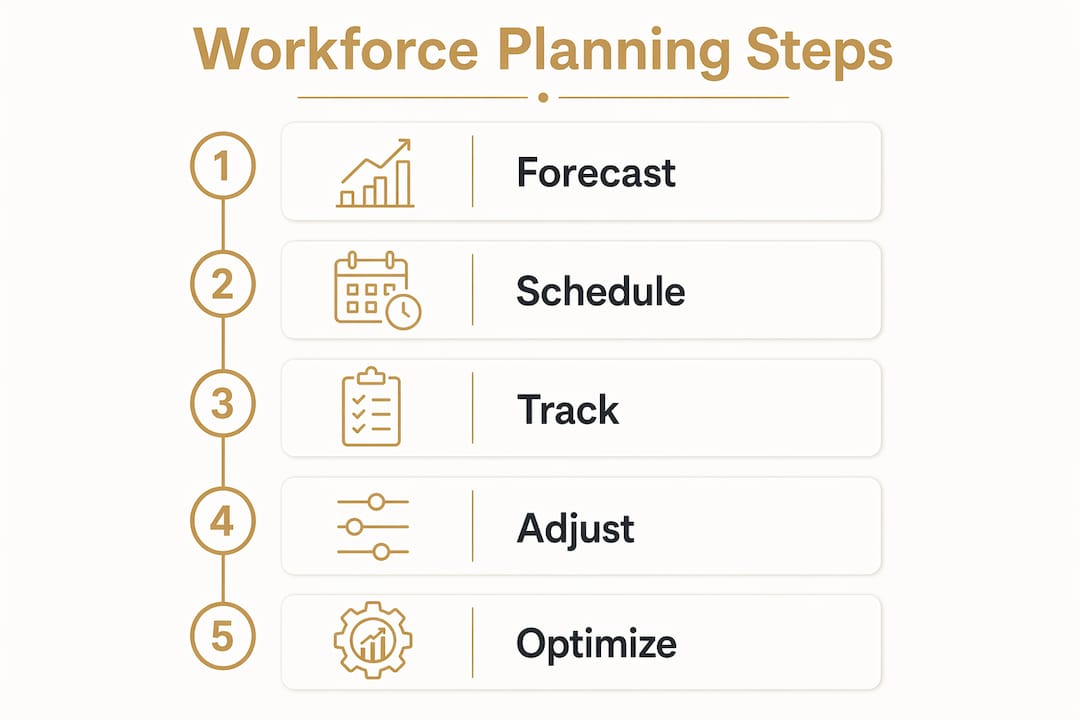
Construction workforce planning is the coordinated effort to forecast, schedule, and track labor resources across every phase of a project. The industry term for the broader practice is workforce management in construction, which covers forecasting, scheduling, tracking, and coordination and directly influences project performance and labor costs. The distinction matters: workforce planning is the forward-looking piece, while workforce management covers execution and real-time adjustment.
Poor planning shows up fast on a jobsite. Crews arrive before the previous trade finishes. Skilled workers sit idle waiting on materials or permits. Overtime spikes because no one mapped the critical path against available headcount. These are not random bad days. They are predictable outcomes of treating labor allocation as an afterthought.
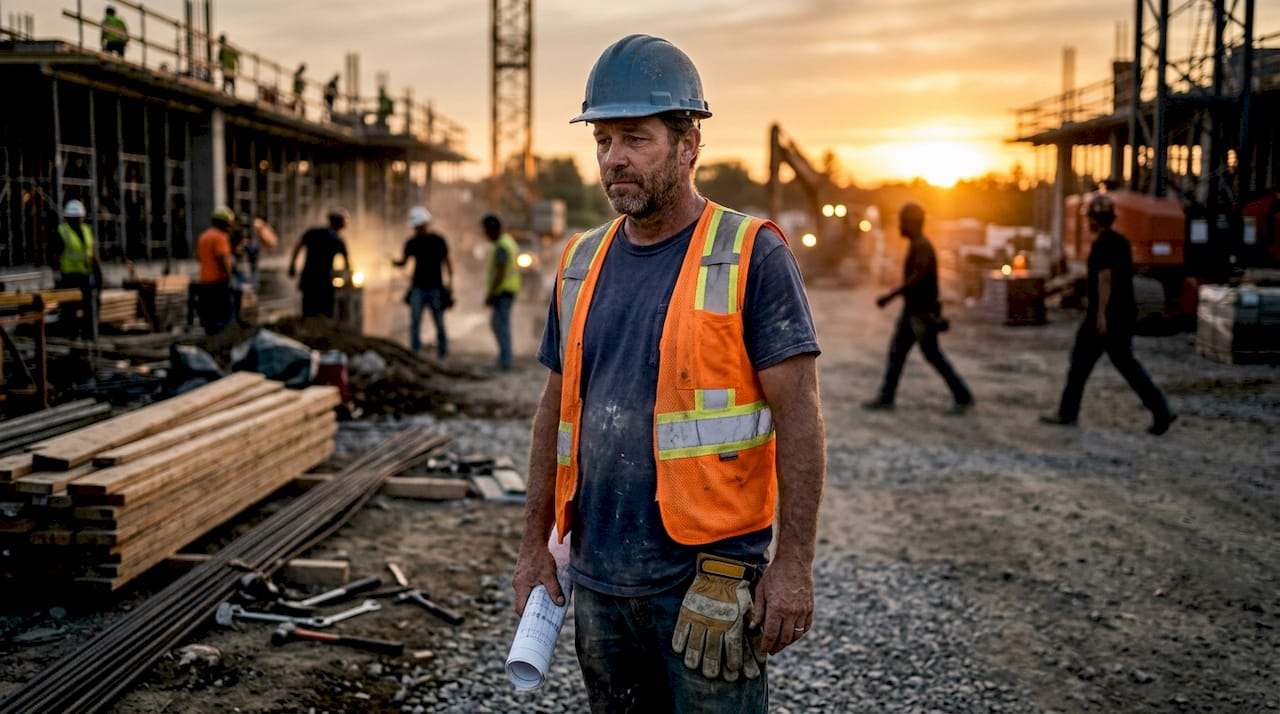
The financial stakes are real. When labor is your largest variable cost, every hour of idle time or unplanned overtime cuts directly into margin. Construction managers who treat workforce planning as a living discipline, not a one-time exercise, consistently deliver projects closer to budget and on schedule.
What are the core components of effective construction workforce planning?
Effective construction labor planning rests on five interconnected components. Each one fails without the others.
- Labor demand forecasting. Project schedules drive headcount needs. You map each phase against trade requirements, crew sizes, and duration to predict when and how many workers you need. Forecasting too late means scrambling for labor at peak demand, when rates are highest.
- Skills and role alignment. The right person must hold the right certification for the right task. Misaligning a journeyman electrician to a task requiring a master license creates compliance risk and rework. The 7 Rs framework (right person, right skill, right role, right time, right place, right cost, right quantity) gives planners a structured checklist for every assignment.
- Scheduling and sequencing. Trade handoffs are where projects lose time. Concrete finishers cannot start until formwork crews clear. Mechanical rough-in cannot begin until framing closes. Sequencing these transitions with buffer time built in prevents the cascade of delays that kills project timelines.
- Documentation. Structured documentation reduces project disputes by 40%. That number reflects a real cost: disputes consume management time, delay decisions, and damage subcontractor relationships. Keeping workforce plans documented and accessible to all stakeholders cuts that risk significantly.
- Flexibility and contingency. Weather, absenteeism, and scope changes are not exceptions. They are constants. A workforce plan without built-in contingency is not a plan. It is a wish list.
Pro Tip: Build a two-week rolling labor forecast updated every Friday. It forces your team to look ahead, catch gaps before they become emergencies, and gives foremen a clear picture of who shows up Monday morning.
How does technology improve workforce planning accuracy?
Technology has moved construction project staffing from spreadsheet guesswork to data-driven precision. Three categories of tools drive the biggest gains.
BIM integration with location-based planning
Building Information Modeling, when integrated with location-based scheduling techniques like Line of Balance, produces significantly more accurate labor estimates. BIM integration with location-based planning achieves a utility rating of 0.90 for reducing errors in quantity and productivity estimation. That is a near-perfect score from expert practitioners. The practical result: planners can model crew movements through a building floor by floor, identify bottlenecks before they happen, and adjust headcount before mobilization.
AI-driven scheduling
AI scheduling reduces labor costs and project delays by processing multiple constraints simultaneously, including union rules, worker certifications, availability windows, and weather contingencies. A human scheduler managing a 200-person crew across three trades can realistically track a handful of variables at once. An AI scheduling engine tracks thousands. The output is a schedule that minimizes overtime, respects labor agreements, and accounts for realistic productivity rates.
Real-time labor tracking
Firms managing labor across multiple sites without real-time visibility are prone to cost overruns and trade sequencing failures. Real-time tracking closes that gap. When a foreman logs crew attendance and daily output through a field app, project managers see actual productivity against planned productivity the same day. That visibility lets you catch a slipping trade before it delays the next one. Debecorp’s CHERP platform is built specifically for this kind of real-time labor tracking at the trade level, giving field teams and managers a shared view of daily progress.
Pro Tip: Pair your labor tracking data with your schedule’s critical path. If actual productivity on a critical activity drops below 85% of plan for two consecutive days, escalate immediately. Waiting a week to notice costs you two weeks to recover.
| Technology | Primary benefit | Best use case |
|---|---|---|
| BIM with location-based scheduling | Reduces estimation errors | Pre-construction labor modeling |
| AI scheduling engines | Optimizes multi-variable constraints | Large crews with union rules |
| Real-time field tracking apps | Closes planned vs. actual gap | Multi-site daily labor visibility |
| Integrated workforce platforms | Connects planning to execution | End-to-end project labor management |
What challenges do construction projects face in workforce planning?
The most common failure in construction workforce optimization is treating the workforce plan as an administrative document rather than a project execution tool. A plan filed after kickoff and never updated is worse than no plan. It creates false confidence.
Four specific challenges show up repeatedly across projects of every size.
- Disconnect from the project timeline. Workforce plans built in isolation from the master schedule produce headcount projections that do not match actual phase durations. When the schedule shifts, the labor plan stays frozen. The fix is direct integration: your workforce plan must reference the same activity IDs and durations as your CPM schedule.
- Trade handoff failures. Timely mapping of crew handoffs and incorporating weather contingency into weekly schedules is one of the highest-leverage practices in construction labor planning. Most project delays do not come from a single trade running late. They come from a late trade blocking the next one, which blocks the one after that. Mapping every handoff with a defined completion trigger prevents that cascade.
- Information silos and poor documentation. When workforce plans live in one person’s inbox, disputes multiply. Subcontractors dispute scope. Foremen dispute hours. Owners dispute progress. Document sharing for construction teams that makes workforce plans visible and version-controlled eliminates most of these disputes before they start.
- No buffer for the unexpected. Absenteeism rates on large construction projects run higher than most managers plan for. Weather delays are predictable in aggregate even when specific days are not. A workforce plan that assumes 100% crew availability every day will fail every week.
How do you sustain workforce planning across multiple concurrent projects?
Managing construction manpower strategy across several active projects at once requires a system, not just discipline. Here is a practical approach that experienced project planners use.
- Build a centralized labor pool view. List every worker, their trade classification, current assignment, and earliest availability date. Update this weekly. Without this view, you cannot make rational decisions about where to move crews when one project accelerates and another slips.
- Treat workforce plans as living documents. Construction workforce planning works best as a living document updated continuously against the critical path and actual field productivity. Set a weekly cadence: pull actual output data from the field, compare to plan, and adjust next week’s labor allocation before the week starts.
- Coordinate with recruiters and subcontractors 6–8 weeks ahead. Labor shortages do not appear overnight. They develop over weeks as demand builds and available workers get committed elsewhere. Sharing your 6-week look-ahead with your staffing partners and subcontractors gives them time to source and mobilize before you hit a gap.
- Assign a workforce planning owner on each project. Workforce planning without a named owner drifts. The owner does not need to be a dedicated resource planner. A senior superintendent or project engineer can carry this responsibility. The key is accountability: one person who reviews the plan weekly and flags variances.
- Use multi-site crew coordination tools to reduce bottlenecks. When the same crew type is needed on two sites simultaneously, you need visibility across both to make the call. Enterprise field platforms that aggregate labor data across projects give operations managers the information to make those decisions in real time, not in hindsight.
Effective workforce allocation across concurrent projects also requires honest conversations with project owners about schedule risk. When labor is constrained, something has to give: scope, schedule, or cost. The workforce plan is the document that makes that conversation factual instead of emotional.
Key Takeaways
Construction workforce planning is a core project execution discipline that directly controls labor costs, schedule performance, and project quality when treated as a living, continuously updated process.
| Point | Details |
|---|---|
| Define it correctly | Workforce planning aligns labor supply with project demand across every phase, not just at kickoff. |
| Documentation cuts disputes | Structured workforce plan documentation reduces project miscommunication and disputes by 40%. |
| Technology sharpens accuracy | BIM integration with location-based scheduling achieves a 0.90 utility rating for reducing estimation errors. |
| Living documents outperform static ones | Plans updated weekly against actual field productivity keep labor allocation aligned with the real schedule. |
| Multi-site visibility is non-negotiable | Real-time labor tracking across sites prevents cost overruns caused by invisible trade sequencing failures. |
Why workforce planning is the most underrated discipline in construction
I have watched project managers spend weeks perfecting their CPM schedules and then hand labor planning to an admin coordinator with a spreadsheet. The schedule is a masterpiece. The workforce plan is a headcount guess. The result is predictable: the schedule falls apart in week three because the right crews are not there.
Workforce planning is not an HR function. It is a project controls function. The moment you treat it that way, everything changes. You start asking different questions before mobilization: not just “how many workers do we need?” but “which certifications, which weeks, which handoff triggers, and what happens if we lose 15% of the crew to a competing project?”
The technology gap has closed significantly. BIM-integrated scheduling and AI-driven tools now handle the computational complexity that used to require a dedicated resource planner on every large project. What has not changed is the need for a human being who owns the plan and updates it every week without fail.
The managers I have seen deliver projects on budget share one habit: they treat their workforce plan with the same rigor as their cost report. They review it weekly, update it with real data, and use it to make decisions. The ones who treat it as a document to file and forget are the ones calling owners with bad news in month four.
— SEAN
How Debecorp supports construction workforce management
Construction managers running multiple active projects need more than a good plan. They need tools that connect the plan to what is actually happening on the ground.

Debecorp builds CHERP and SiteComm specifically for the trades, not for generic project management. CHERP handles time and attendance, daily logs, and safety compliance at the trade level, giving foremen and project managers a shared, real-time view of labor output. SiteComm keeps field teams connected and informed across sites. Both platforms are built from the ground up with input from tradesmen who know what actually happens on a jobsite. Explore CHERP and SiteComm to see how field-first software supports every layer of your workforce plan.
FAQ
What is construction workforce planning in simple terms?
Construction workforce planning is the process of matching the right workers and skills to the right project tasks at the right time. It covers forecasting labor demand, scheduling crews, and adjusting plans as field conditions change.
How does workforce planning differ from workforce management?
Workforce planning is forward-looking: it forecasts and schedules labor before and during a project. Workforce management covers real-time execution, tracking, and adjustment of that plan as work progresses.
Why does documentation matter in workforce planning?
Structured documentation reduces project miscommunication and disputes by 40%. It gives all stakeholders a shared record of labor commitments, schedule changes, and crew assignments.
How often should a construction workforce plan be updated?
A workforce plan should be updated at least weekly, aligned with actual field productivity data and the project’s critical path. Static plans become inaccurate within days on active jobsites.
What role does technology play in construction labor planning?
BIM integration with location-based scheduling reduces estimation errors significantly, while AI scheduling tools process union rules, worker availability, and weather contingencies simultaneously to produce more accurate crew assignments.