
Information silos in construction teams are isolated pockets where critical project data fails to flow freely between people, departments, or systems, directly causing delays, cost overruns, and coordination failures. A February 2026 study of 122 construction professionals identified 20 distinct barriers to effective team communication, grouped across five dimensions. The most damaging of these barriers include ineffective communication techniques, frequent contract changes, lack of trust, slow information flow, and unethical behavior. Addressing the common information silos construction teams face is not optional. It is the difference between a project that finishes on time and one that bleeds money until closeout.
1. What are the most common information silos in construction teams?
Construction teams generate enormous amounts of data every day. Without deliberate systems to share it, that data gets trapped. The industry term for these traps is “information silos,” though construction professionals also call them data gaps, communication breakdowns, or coordination failures. Here are the ten most common ones.
1. Fragmented project data across tools

Many construction projects still rely on spreadsheets, emails, and PDFs to manage critical project information. These formats do not talk to each other, so the same data gets entered multiple times with different results. Decisions get made on outdated numbers.
2. Contract change isolation
Change orders and contract amendments often live in legal or procurement folders that field teams never see. The crew keeps building to the original scope while the contract has already shifted. That gap creates disputes, rework, and claims.
3. Disconnected procurement data
Procurement teams track material orders, lead times, and vendor commitments in systems that project managers rarely access. When a delivery slips, the field team finds out the day it was supposed to arrive, not weeks earlier when there was still time to adjust.
4. Isolated safety information
Safety records, incident reports, and inspection findings often sit in a separate safety management system. Project managers and subcontractors do not see patterns until a serious incident forces a review. That delay costs lives and money.
5. Siloed subcontractor communication
General contractors frequently manage each subcontractor through separate email threads, phone calls, and paper submittals. No single view of subcontractor progress exists. Coordination gaps appear at every interface between trades.
6. Delayed documentation
Delaying documentation until project closeout is one of the most common and costly habits in construction. Teams scramble to reconstruct daily logs, RFI histories, and inspection records from memory. Handover packages arrive late and full of gaps.
7. Digital tool fragmentation
A single project can run scheduling in one platform, financials in another, and field reporting in a third. None of these systems share a common data structure. Project leaders spend hours reconciling reports instead of managing work.
8. Lack of shared financial visibility
Field supervisors rarely see budget burn rates or cost forecasts in real time. They make scope and resource decisions without knowing the financial consequences. By the time the cost report catches up, the damage is done.
9. Communication technique gaps
Teams default to informal verbal updates and text messages for critical decisions. No record exists. When something goes wrong, there is no trail to follow and no accountability to assign.
10. Organizational culture barriers
Late communication is normalized on most construction projects. People wait until a problem is serious before raising it. That culture turns manageable issues into expensive crises.
2. How do information silos damage construction team communication?
The consequences of these silos compound quickly. A single missed update in procurement can cascade into a two-week schedule delay, a change order dispute, and a subcontractor claim. Understanding the specific damage each silo causes helps teams prioritize which ones to fix first.
Slow information flow kills decision speed. When data lives in separate systems or inboxes, project leaders cannot get a current picture of project status without manually pulling reports from multiple sources. Decisions that should take hours take days.
Duplicate work inflates labor costs. When teams do not share a single version of the project record, multiple people recreate the same documents. An RFI gets logged in three places. A daily log gets written twice. That redundancy adds up across a long project.
Errors multiply without a shared source of truth. Integrating financials, schedules, and safety records into one centralized system reduces duplicate work and improves margins. Without that integration, conflicting versions of the same data lead to wrong decisions.
Accountability disappears. When communication happens informally and without documentation, no one owns a decision. Disputes about who approved what become impossible to resolve. Claims and litigation follow.
Issue escalation slows to a crawl. Field crews often know about a problem days before it reaches the project manager. Cultural norms that discourage early reporting mean small problems grow into large ones before anyone with authority acts.
Pro Tip: Set a project rule that any concern, even an incomplete one, gets logged the day it surfaces. Early, imperfect information creates more options than perfect information delivered too late.
3. Strategies to break down data silos in construction projects
Overcoming data silos in construction requires more than buying new software. It requires deliberate decisions about how data is structured, who owns it, and how teams are held accountable for sharing it.
Build a Single Source of Truth
A Single Source of Truth (SSOT) is a centralized system where financials, schedules, safety records, and RFI logs all live together and update in real time. The SSOT concept is not new, but most construction firms still have not implemented it. The reason is that it requires aligning Work Breakdown Structures (WBS) and Cost Breakdown Structures (CBS) across every system the project uses. Aligning WBS and CBS across integrated digital systems creates reliable, joined-up data flows essential for effective project controls.
Adopt living documentation practices
Efficient teams update records continuously as work progresses, not at the end of a phase or project. This practice, called living documentation, means daily logs, inspection records, and RFI responses are current at all times. Teams that do this avoid the end-of-project scramble that siloed organizations treat as normal.
Formalize workflows and assign clear ownership
Formalizing workflows and establishing accountability reduce misinformation and improve coordination. Every data input needs an owner. Every approval needs a defined path. Without that structure, even the best platform becomes another place where data gets lost.
Govern your digital tools, not just deploy them
Digital transformation requires formal governance policies. Digitizing a broken workflow does not fix the workflow. Teams need standardized data formats, defined roles, and approval processes built into the platform from day one. Technology adoption alone cannot break silos. Governance frameworks that define roles and approval processes are what create transparency and trust.
Pro Tip: Before rolling out any new platform, map every data input, who creates it, who approves it, and who needs to see it. That map becomes your governance policy.
Prioritize early communication as a project standard
Teams that communicate concerns early manage disruptions better than those that wait for certainty. Make early reporting a formal expectation, not a cultural preference. Build it into daily standup meetings, weekly reporting templates, and subcontractor coordination calls.
4. How procurement practices and culture create silos
Procurement strategy and organizational culture are two of the most underestimated drivers of information silos in construction. Fixing technology without addressing these root causes produces limited results.
Low-bid procurement degrades document quality. Lowest cost procurement practices increase silos through poor document quality and coordination, raising project costs and delays. When contracts go to the lowest bidder, there is rarely budget for thorough documentation, coordination meetings, or integrated data systems. The silo problem is baked in before the project starts.
Contractual frameworks shape data governance. How a contract assigns responsibility for information sharing determines whether teams collaborate or protect their own data. Contracts that do not specify documentation standards, data formats, or communication protocols leave those decisions to chance. Chance produces silos.
Cultural resistance to early issue raising is the hardest barrier to fix. Construction teams often operate in a blame culture where raising a problem early feels risky. People wait until they have a solution before they report an issue. That delay turns a two-day fix into a two-week delay.
The shift required is behavioral, not technical. Project leaders who model early, transparent communication create teams that do the same. That behavior has to be reinforced consistently, especially when the news is bad. Teams that build this habit manage risk better than any software can on its own.
Key takeaways
Information silos in construction teams are structural problems that require structural solutions, including centralized data, formal governance, and a culture of early communication.
| Point | Details |
|---|---|
| Silos are structural, not accidental | They form from procurement choices, tool fragmentation, and cultural norms that reward silence over early reporting. |
| Living documentation prevents end-of-project scrambles | Teams that update records continuously avoid the costly reconstruction that siloed organizations treat as normal. |
| SSOT integration reduces duplicate work | Aligning WBS and CBS across systems creates one reliable data flow instead of several conflicting ones. |
| Governance matters more than technology | Deploying a platform without defined roles and approval processes creates a new place for data to get lost. |
| Early communication is a risk management tool | Raising incomplete concerns early creates more options than waiting for certainty and finding fewer. |
The silo problem is a leadership problem
The most honest thing I can tell you about information silos in construction is this: the technology to fix them has existed for years. The reason silos persist is not a software problem. It is a leadership problem.
I have watched project teams deploy expensive integrated platforms and still end up with the same fragmented communication they had before. The platform changed. The behavior did not. Nobody defined who owned each data input. Nobody enforced the documentation standard. The tool became another place where information went to die.
The teams I have seen actually break their silos share one trait. Their leaders treat early, imperfect communication as a professional standard, not a nice-to-have. They do not punish people for raising incomplete concerns. They reward it. That shift in behavior does more for information flow than any platform upgrade.
The other thing worth saying plainly: procurement drives this more than most project leaders admit. When you award a contract on lowest cost, you are often awarding it to a team that cannot afford the coordination overhead that prevents silos. You get what you pay for, and what you pay for is the silo.
Fix the culture. Fix the procurement criteria. Then the technology actually works.
— SEAN
Debecorp’s platforms address construction communication gaps directly
Construction teams that are serious about centralizing field data need platforms built by people who understand the trades from the ground up. Debecorp built CHERP and SiteComm specifically for skilled tradespeople, not adapted from generic project management software.
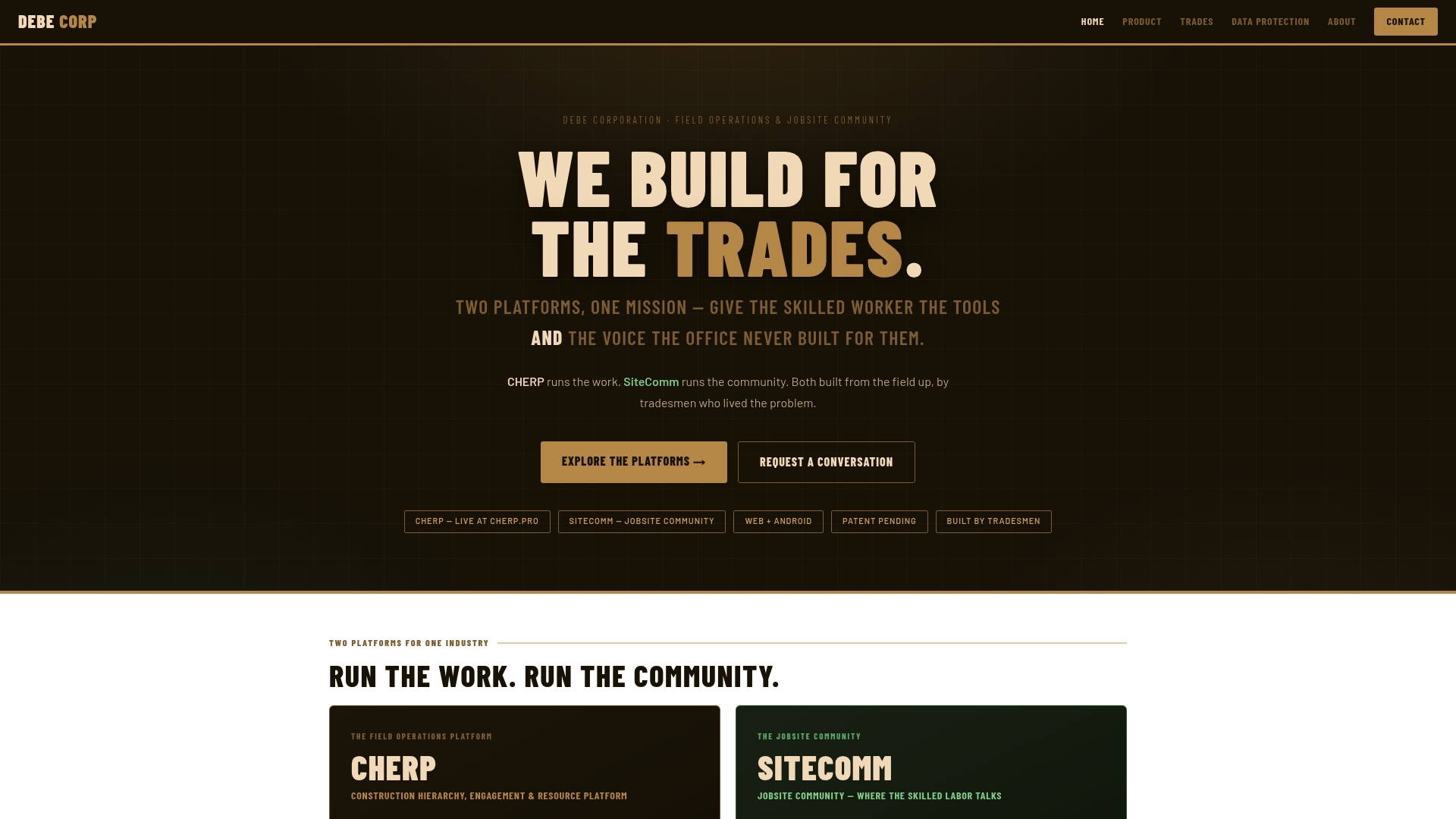
CHERP manages time and attendance, daily logs, and safety compliance in one place, tailored to specific trades. SiteComm handles jobsite communication so that critical updates reach the right people without getting buried in email threads. Both platforms are built to give construction teams a single, reliable record of what happened on the job, when it happened, and who was responsible. That is the foundation every team needs to stop silos before they start. Visit Debecorp to see how the platforms work in practice.
FAQ
What are information silos in construction teams?
Information silos in construction teams are isolated pockets where project data, decisions, or communications fail to reach all relevant team members. They form when tools, departments, or subcontractors do not share a common system or communication standard.
What causes the most common information silos on construction projects?
The top causes are fragmented digital tools, low-bid procurement that underfunds coordination, and a cultural norm of late communication. A 2026 study of 122 professionals identified slow information flow and ineffective communication techniques as leading barriers.
How do information silos affect construction project costs?
Silos cause duplicate work, slow decisions, and missed issues that escalate into expensive claims. Integrating project financials, schedules, and safety records into a centralized system directly reduces these costs.
What is the fastest way to start breaking down construction data silos?
Start with living documentation. Require teams to update daily logs, RFI records, and inspection reports as work happens, not at the end of a phase. That single habit creates a shared record that reduces the most common coordination failures.
Does new software automatically fix information silos in construction?
No. Governance frameworks defining roles, data formats, and approval processes are required for technology to work. Digitizing a broken workflow without those standards creates a new location for the same old problem.