
Miscommunication on a construction jobsite is the leading cause of rework, delays, and cost overruns. Up to 30% of total project costs can disappear into rework driven directly by poor site communication. That number represents real money: blown budgets, missed deadlines, and crews redoing work that should have been right the first time. The industry term for the discipline that prevents this is construction communication management, and it covers every channel, protocol, and habit that keeps information flowing accurately from field to office and back. This guide gives you the tools, plans, and daily practices to fix the problem at its root.
How to reduce miscommunication on jobsite: the core problem
The core problem is not that crews lack information. The problem is that the right information rarely reaches the right person at the right time. Up to 52% of rework ties back to poor project data and miscommunication. That means more than half of all rework on a typical project is preventable with better communication habits and systems.
Construction sites are high-noise, high-pressure environments. Workers spread across multiple levels, zones, and shifts cannot rely on a single channel to stay aligned. Verbal instructions get lost. Drawings get revised without everyone knowing. Change orders arrive late. Each gap compounds the next, and by the time a mistake surfaces, the cost to fix it has multiplied.
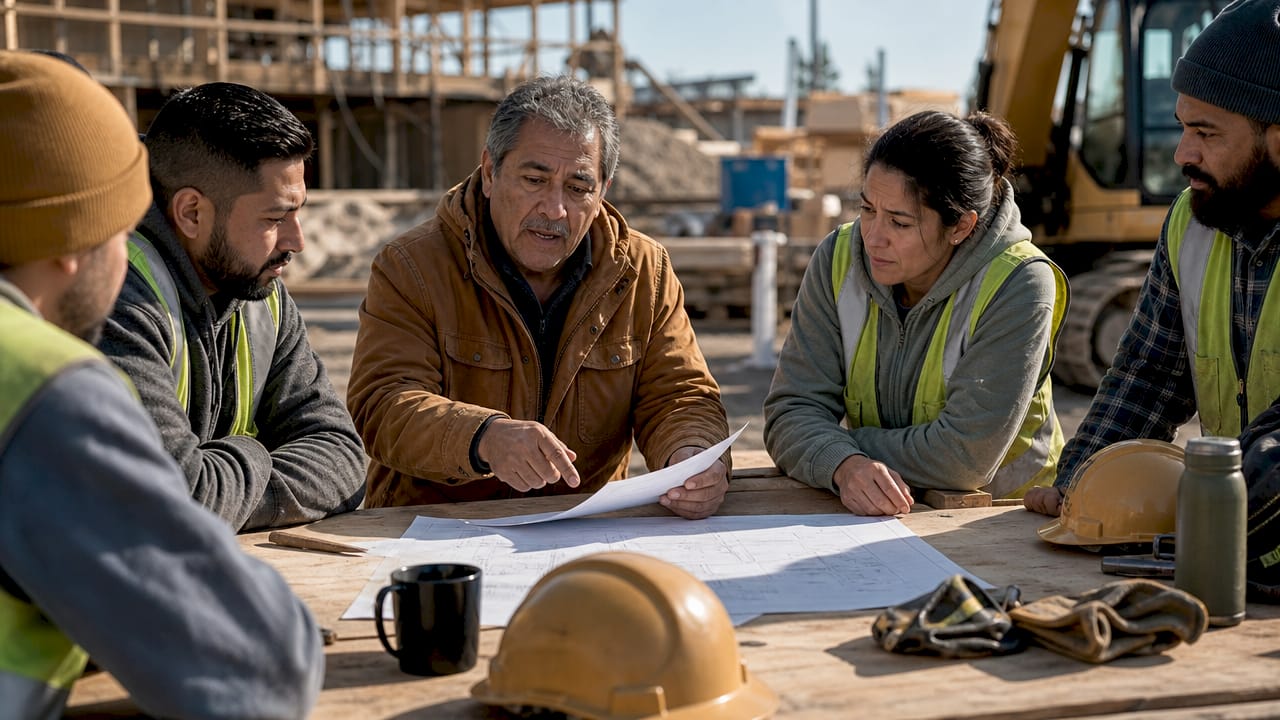
The solution is not one tool or one meeting. It is a layered system: the right channels, a written plan, consistent daily habits, and a culture where workers feel safe raising concerns early.
What are the best communication tools for a construction jobsite?
No single communication channel is sufficient on a construction site. A hybrid approach combining radio, written records, and face-to-face briefings delivers both speed and confirmation. Each channel has a specific role, and mixing them correctly is what keeps messages from falling through the cracks.
| Tool | Best use case | Key challenge |
|---|---|---|
| Two-way radio | Urgent, real-time coordination across distance | No written record; noise interference |
| SMS/text messaging | Quick updates to individuals or small groups | Easy to miss; no version control |
| Digital field platforms | Document sharing, RFIs, daily logs, change orders | Requires device access and connectivity |
| Face-to-face briefings | Safety-critical instructions, complex scope changes | Time-intensive; hard to scale across shifts |
| Formal notifications, approvals, and paper trails | Slow for urgent matters; inbox overload |
The table above shows that no single tool covers every scenario. Radio handles urgency but leaves no record. Digital platforms create records but require connectivity. Face-to-face briefings confirm understanding but cannot reach every worker simultaneously.
Delayed notifications and inconsistent methods increase misunderstandings and safety risks. Real-time, standardized updates reduce errors and keep crews aligned across shifts. For real-time jobsite updates, the most effective approach pairs a digital platform for documentation with radio or direct contact for urgent field decisions.
Pro Tip: Test every communication tool under actual jobsite conditions before committing to it. A platform that works perfectly in a conference room may fail in a basement with no cell signal.
How to create a structured communication plan for your jobsite
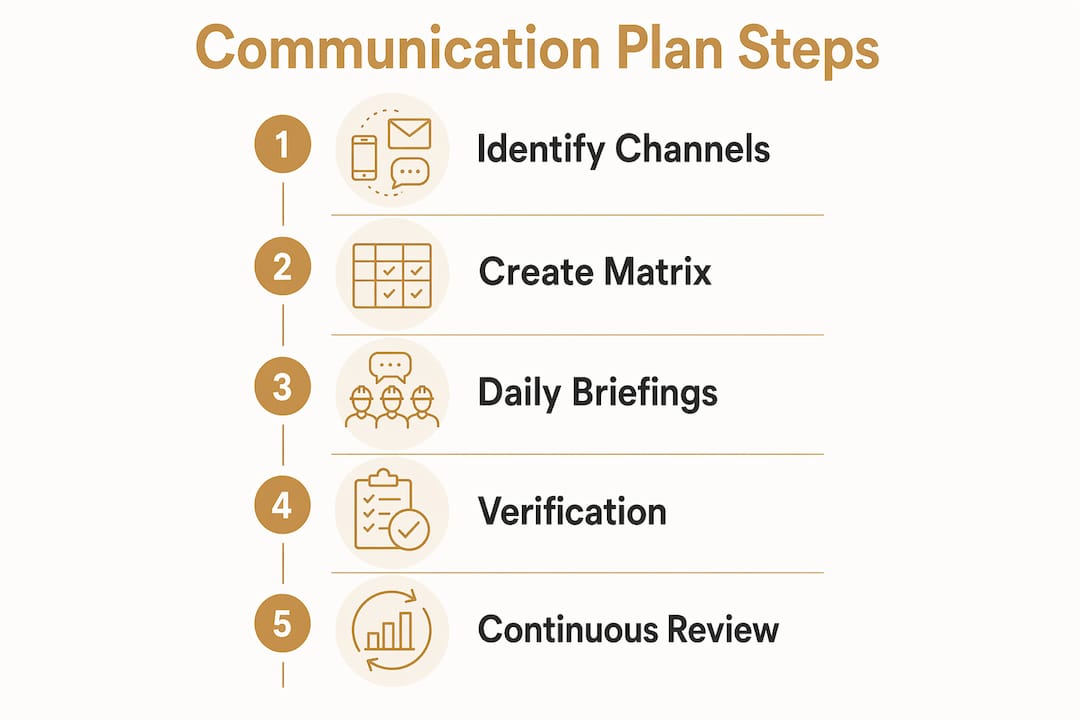
A communication plan is not a nice-to-have document. It is the blueprint that defines who sends what information, to whom, through which channel, and how often. Without it, crews default to informal habits that create information gaps at the field-office handoff, which is where most miscommunication originates.
Build a communication matrix first
A communication matrix maps every message type to its sender, recipient, channel, and frequency. It answers four questions: Who needs this information? What do they need to know? When do they need it? How does it reach them? Completing this matrix before a project starts prevents both information overload and critical gaps.
Steps to build your communication plan
- List all stakeholders. Include field crews, foremen, project managers, subcontractors, owners, and inspectors. Every party that touches the project needs a defined communication role.
- Categorize message types. Separate safety-critical messages (stop-work orders, hazard alerts) from operational updates (schedule changes, material deliveries) and informational notices (meeting minutes, progress reports). Each category needs its own channel and response time standard.
- Assign ownership. Every message type needs one person responsible for sending it. Shared responsibility means no responsibility.
- Set frequency and format. Daily briefings, weekly progress meetings, and shift handover reports should all have a fixed time, location, and agenda format.
- Document RFIs and change orders immediately. Every request for information and every change order must enter a written record the same day it is issued. Verbal-only change orders are the single most common source of scope disputes.
- Build in a feedback loop. Workers need a defined way to confirm they received and understood critical information. A simple sign-off sheet or digital acknowledgment works.
Communication planning embedded in risk assessments builds a safety net for high-pressure situations. When a crisis hits, crews fall back on whatever habits and protocols they practiced. A plan that lives only in a binder gets ignored. A plan that is rehearsed becomes instinct.
Pro Tip: Add a “communication risk” line item to your project risk register. Rate the likelihood and impact of communication failures the same way you rate safety or schedule risks. It forces the team to take it seriously from day one.
What are the best daily communication habits for construction teams?
Consistent daily habits are what turn a communication plan into actual behavior on the ground. Plans define the structure. Habits make it stick.
The most effective daily habits center on three moments: the start of the shift, the handover between shifts, and the end of the workday.
- Morning toolbox talks set the day’s priorities, flag hazards, and give every worker a chance to ask questions before work begins. Keep them to 10 minutes or less. Long meetings lose attention fast.
- Shift handover briefings transfer critical information from one crew to the next. The outgoing foreman should document work completed, open issues, and any safety concerns before leaving the site.
- End-of-day logs capture what happened, what changed, and what the next shift needs to know. Digital daily logs are faster to complete and easier to search than paper forms.
Regular site walks and informal conversations surface vital information that formal reports miss. A foreman who walks the site twice a day will catch a misread drawing before it becomes a rework order. That informal intelligence is not a replacement for documentation. It is an early warning system.
Building trust and open feedback channels is the cultural foundation that makes every other habit work. Workers who fear blame stay quiet about near misses and errors. Workers who trust their foreman report problems early, when they are still cheap to fix.
“The most dangerous words on a jobsite are ‘I thought you knew.’ A culture where workers feel safe asking questions and raising concerns is the single most effective safety and quality tool a project manager has.”
Pro Tip: Create a simple, anonymous near-miss reporting method. A physical card box at the site office or a digital form on a shared tablet removes the fear of personal blame and generates data you can actually use to prevent future errors.
How do you troubleshoot common jobsite communication failures?
Even well-planned projects hit communication problems. The key is recognizing the pattern early and applying a tested fix before the error compounds.
| Problem | Root cause | Corrective action |
|---|---|---|
| Crews working from outdated drawings | No centralized document control | Use a single source of truth for all drawings and RFIs |
| Field-office information gaps | No defined handoff protocol | Implement a daily written field report with required sign-off |
| Language barriers causing misunderstandings | Multilingual crews without visual aids | Add diagrams, color coding, and bilingual safety signage |
| Scope disputes between trades | Verbal-only change orders | Require written change orders before any work begins |
| Delayed hazard alerts | No real-time alert channel | Designate a radio channel or group text exclusively for safety alerts |
The most persistent problem on most sites is information silos between field and office. The field crew knows what is actually happening. The project manager knows what the schedule and budget say. When those two pictures do not match, the gap grows until it becomes a crisis.
Fixing silos requires a structural solution, not just better intentions. Here is a proven sequence:
- Designate one person as the daily field-to-office liaison. This role owns the morning report and the afternoon update.
- Standardize the report format so the office can read it in under two minutes.
- Set a hard deadline for the report, such as 7:00 AM and 3:00 PM. Consistency builds the habit.
- Use a document sharing platform that timestamps every update and notifies recipients automatically.
Verification is the step most teams skip. Sending a message is not the same as confirming it was received and understood. Build a simple confirmation step into every critical communication. A read receipt, a verbal repeat-back, or a digital acknowledgment takes seconds and prevents hours of rework.
Communication is risk management, not paperwork
Most project managers treat communication planning as an administrative task. They are wrong. It is one of the highest-leverage risk management activities on any project.
I have watched projects with tight schedules and thin margins succeed because the foreman ran a tight morning briefing and kept a clean daily log. I have also watched well-funded projects fall apart because the superintendent assumed everyone “just knew” what was expected. The assumption is always the problem.
The teams that communicate well do not do it because they have more time. They do it because leadership modeled the behavior from day one. When a project manager shows up to the toolbox talk, takes notes, and follows up on open items, the crew takes communication seriously. When leadership skips the meeting, so does everyone else.
The other thing I have learned is that communication protocols need to be reviewed, not just written. A plan that made sense in week one may not fit the project in week six, when the scope has changed and three new subcontractors have come on board. Build a monthly communication review into your project schedule. It takes 30 minutes and catches problems before they become disputes.
— SEAN
Field software that keeps your jobsite aligned
Construction teams that move from scattered texts and paper logs to a centralized field platform see immediate gains in clarity and accountability.
Debecorp builds two platforms specifically for the trades: CHERP and SiteComm. CHERP handles field operations including time and attendance, daily logs, and safety compliance, all structured around how tradesmen actually work. SiteComm adds real-time communication and coordination tools that connect field crews with the office without requiring workers to leave their trade behind. Both platforms were built from the ground up with direct input from tradesmen. Visit the CHERP and SiteComm product page to see how integrated field software reduces errors and keeps every crew member working from the same information.
Key takeaways
Reducing miscommunication on a construction jobsite requires a layered system of the right tools, a written communication plan, consistent daily habits, and a culture where workers report problems early.
| Point | Details |
|---|---|
| Rework costs are preventable | Up to 52% of rework ties to miscommunication; a structured plan cuts that exposure directly. |
| Hybrid tools outperform single channels | Combine radio, digital platforms, and face-to-face briefings to cover every scenario and urgency level. |
| A communication matrix prevents gaps | Map who needs what information, when, and how before the project starts to eliminate field-office handoff failures. |
| Daily habits make the plan real | Morning briefings, shift handovers, and end-of-day logs turn written protocols into consistent crew behavior. |
| Verification closes the loop | Confirm every critical message was received and understood; sending is not the same as communicating. |
FAQ
What causes the most miscommunication on construction jobsites?
The most common cause is the field-to-office information gap, where crews and project managers operate from different versions of the same facts. Outdated drawings, verbal-only change orders, and missing shift handover notes compound the problem.
How does a communication matrix help construction teams?
A communication matrix defines who receives what information, through which channel, and how often. It prevents both information overload and critical gaps by assigning clear ownership to every message type before work begins.
What is the fastest way to improve communication on a jobsite?
Start with a daily morning briefing and a written end-of-day field report. These two habits alone surface most active problems and create a paper trail that protects the project and the crew.
How do digital field platforms reduce jobsite confusion?
Digital platforms create a single source of truth for drawings, RFIs, and change orders, eliminating version confusion. Automatic notifications and timestamps confirm that updates reached the right people at the right time.
Why should communication planning be part of risk management?
Communication protocols embedded in risk assessments create a resilience layer that holds when jobsite pressure peaks. Teams that practiced their communication plan under normal conditions default to it automatically during a crisis.