
Task delegation is the deliberate assignment of specific duties and decision-making authority to team members to keep construction projects moving and leadership focused where it matters most. The role of task delegation on the jobsite goes far beyond handing off work. It determines whether a project runs on schedule, whether crews stay accountable, and whether a construction manager can actually lead instead of just react. Only 30% of managers believe they delegate well, and roughly 10% are seen as effective delegators by their teams. That gap costs projects time, money, and momentum every single day.
What is the role of task delegation on the jobsite?
Effective task delegation is the difference between a construction manager who controls every detail and one who builds a team that runs without constant supervision. When delegation works, parallel workflows replace sequential ones. Crews execute while the manager plans the next phase, resolves conflicts, and communicates with owners and subcontractors.
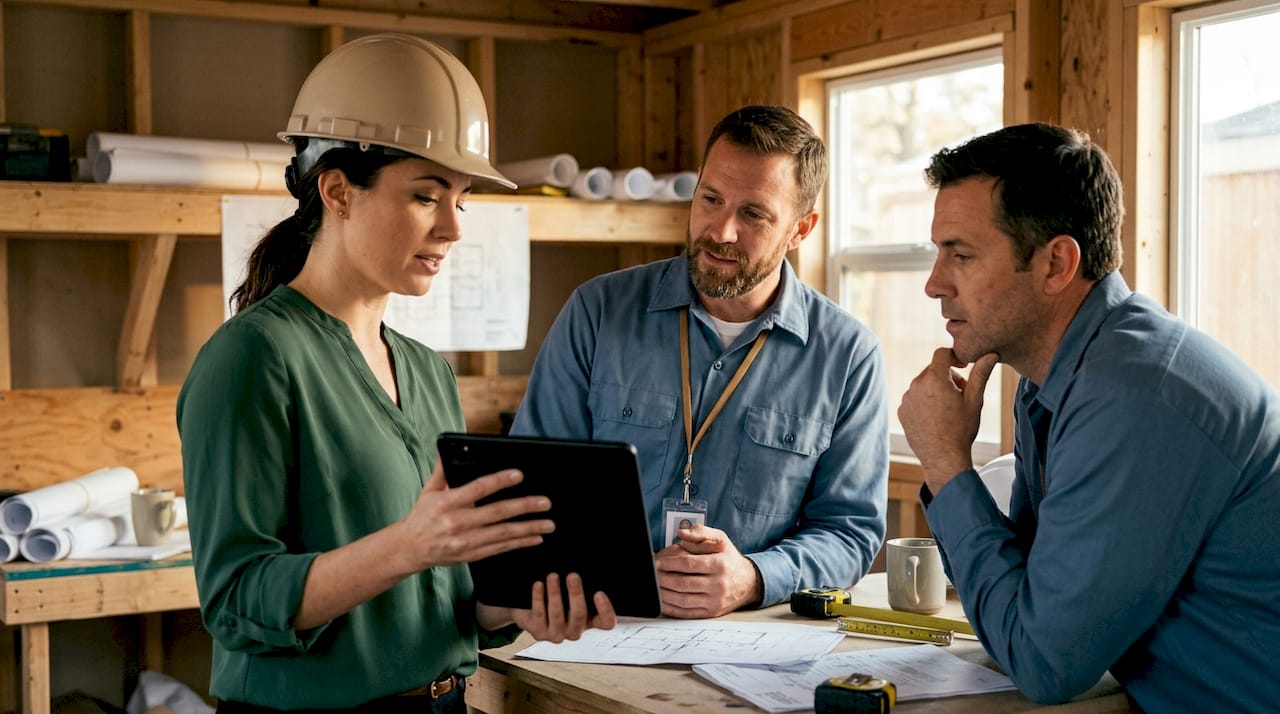
The core principle is straightforward: assign the right task to the right person with the right authority. Without that third element, authority, delegation collapses into micromanagement. A foreman who can assign daily work orders but cannot approve material substitutions will still interrupt the manager a dozen times a day.
Delegation also serves as a development engine. Delegating complex, meaningful work signals belief in an employee’s capability, which builds engagement and long-term growth. On a jobsite, that translates to lead carpenters who take ownership of their scope, safety leads who enforce compliance without being told, and crew chiefs who solve problems before they escalate.
What are the core benefits of effective task delegation?
Delegation frees managers from repetitive tasks so they can focus on decisions that only they can make. Managers who spend 25% of a 40-hour week on delegatable tasks lose roughly 500 hours per year that could go toward coaching, planning, and client relationships. That is more than 12 full work weeks lost annually to work someone else could handle.
The benefits extend well beyond time savings:
- Workload distribution prevents single points of failure. When one person holds every decision, a sick day or site emergency stalls the entire project.
- Team accountability grows when crew members own outcomes rather than just complete tasks. Ownership creates pride and reduces the need for constant follow-up.
- Bottleneck prevention happens naturally when authority travels with the task. Crews can make field decisions without waiting for manager approval on every minor issue.
- Reduced burnout follows when managers stop carrying the full cognitive load of a project. Construction management is already high-stress. Delegation is a direct tool for protecting long-term performance.
- Employee development accelerates when team members handle progressively complex work. Delegation is a leadership skill key for retention and builds the kind of ownership that keeps skilled workers engaged.
Pro Tip: Track which tasks you personally completed last week. Highlight every item a qualified crew member could have handled. That list is your delegation backlog.
How do construction managers choose the right tasks and team members?
Not every task belongs on the delegation list. The selection process is where most managers go wrong, either holding tasks too tightly or handing off work that requires their specific judgment.
Tasks suited for delegation share three traits: they are repeatable, they have clear standards, and they do not require the manager’s unique authority or expertise. Daily safety walk documentation, material receiving logs, crew scheduling within an approved plan, and punch list tracking all qualify. Strategic decisions, contract negotiations, and performance reviews do not.
Matching the task to the right person requires honest assessment of three factors:
- Skill level. Does the team member have the technical knowledge to complete the task correctly? A journeyman electrician can supervise rough-in inspections. A first-year apprentice cannot.
- Current workload. Delegating to an already overloaded crew member creates stress and poor outcomes. Delegation can cause stress if unsupported, so capacity matters as much as capability.
- Readiness for ownership. Some team members are technically capable but not yet ready to make independent decisions. A stretch assignment with coaching is appropriate. A full handoff without support is not.
The critical distinction is delegating ownership versus delegating a task. Transferring decision-making authority drives accountability and accelerates progress. Assigning a task without authority just creates a more complicated to-do list for the manager.
Pro Tip: When assigning a task, state the outcome you need, the standards it must meet, and the decisions the team member is authorized to make without checking back. Write it down. Verbal-only delegation is the fastest path to misalignment.
What are common pitfalls in delegation and how to avoid them?
The most damaging delegation mistake on a construction jobsite is handing off a task without handing off the authority to complete it. Without proper authority, employees depend heavily on the manager, which recreates the exact bottleneck delegation was meant to eliminate.
Other common failure points include:
- Micromanagement. Checking in every hour signals distrust and trains team members to wait for direction rather than act. Set check-in intervals upfront and stick to them.
- Abdication. The opposite of micromanagement is equally damaging. Handing off a task and disappearing leaves team members without support when they hit obstacles. The goal is managed autonomy, not abandonment.
- Delegating to the unprepared. Assigning complex work to someone without the skills or context to handle it creates stress, errors, and rework. The manager ends up taking the task back anyway, which wastes more time than doing it personally from the start.
- The “I can do it better” trap. This belief is often true in the short term. It is always false over the long term. A manager who holds tasks because they can do them faster never builds a team that can run without them.
Delegation failures often come from unclear standards, lack of trust, and micromanagement tendencies. Clear expectations, defined authority levels, and follow-up without takeover are the three mechanisms that prevent breakdown.
Pro Tip: After delegating a task, ask yourself: “Did I give this person everything they need to succeed without coming back to me?” If the answer is no, the handoff is incomplete.
How can technology improve jobsite task management and delegation?
Digital tools change the mechanics of delegation on a construction site. Technology platforms integrating real-time updates, workforce planning, and task tracking reduce information silos and manual coordination, which are two of the biggest obstacles to effective delegation.
75% of SMB leaders say digital technology is key to solving inefficient task management and jobsite bottlenecks. That figure reflects a real operational shift. When task status lives in a shared platform rather than a manager’s head or a paper log, accountability becomes visible to everyone.
Specific capabilities that support delegation include:
- Real-time task assignment and tracking. Managers assign work digitally, set deadlines, and see completion status without walking the site or making phone calls.
- Automated reminders and follow-ups. The system prompts team members on pending items, removing the manager from the role of human reminder.
- Centralized documentation. Shared jobsite documentation gives delegates the information they need to make decisions independently, without waiting for the manager to locate and send files.
- Reduced information silos. Common information silos in construction teams break down when all task data lives in one place. Everyone sees the same picture.
AI tools can automate task assignment, routine content creation, and data synthesis to extend manager capacity further. AI-assisted triage lets managers focus on coaching and critical decisions rather than sorting through status updates.
What practical steps help construction leaders delegate effectively today?
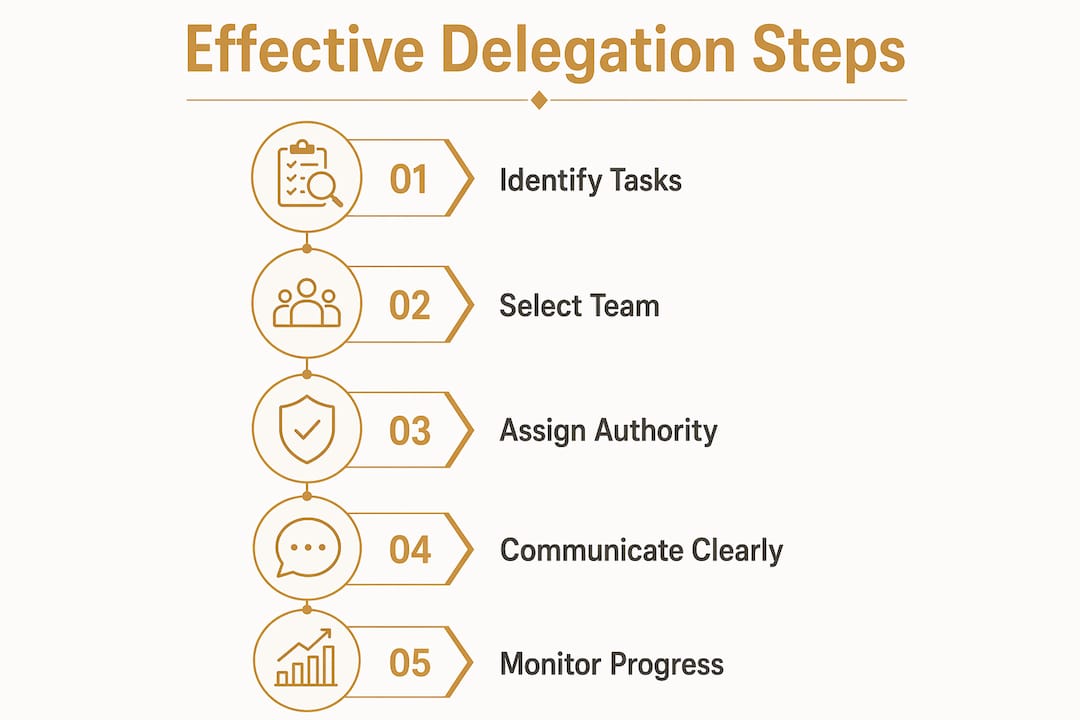
Effective delegation follows a repeatable process. The steps below apply whether a manager is delegating a daily safety log or handing off full scope management for a subcontract package.
- Define the outcome, not just the activity. Tell the team member what a successful result looks like, not just what to do. “Complete the daily safety walk” is a task. “Identify and document any fall hazards before 7:00 AM so the crew can start on time” is an outcome.
- Set the authority boundary upfront. Specify which decisions the delegate can make independently and which require escalation. This single step eliminates most mid-task interruptions.
- Communicate the “why.” Team members who understand why a task matters make better decisions when unexpected situations arise. Context replaces the need for constant guidance.
- Establish check-ins that inform without controlling. A brief daily or weekly touchpoint keeps the manager informed without signaling distrust. The check-in should surface blockers, not serve as a progress interrogation.
- Coach through mistakes instead of taking back control. When a delegate makes an error, the instinct is to reclaim the task. That instinct destroys delegation culture. Correct the error together, identify what went wrong, and let the team member try again.
The first delegation setup takes more time than doing the task personally, but it yields exponential time savings on every repetition. Treat the initial handoff as a capital investment. The payoff compounds across the full project timeline.
Key Takeaways
Effective task delegation on the jobsite requires matching the right task to the right person, transferring real decision authority, and using technology to maintain visibility without micromanagement.
| Point | Details |
|---|---|
| Delegation gap is real | Only 10% of managers are seen as effective delegators by their teams, creating measurable project delays. |
| Authority must travel with the task | Delegating work without decision-making authority recreates the bottlenecks delegation is meant to solve. |
| Match task to team member carefully | Assess skill, workload, and readiness before assigning. Delegating to unprepared workers causes stress and rework. |
| Technology makes delegation visible | Real-time task tracking and centralized documentation reduce information silos and manual follow-up. |
| First handoff costs time, then saves it | Initial delegation setup takes longer than doing it yourself, but the time savings compound across every repetition. |
Why most construction managers delegate less than they should
The managers I respect most on a jobsite share one trait: they are never the busiest person on site. That used to confuse me. Now I understand it as the clearest signal of effective delegation.
Most construction managers hold tasks because letting go feels risky. The work might not meet their standard. The crew member might make a call they would not have made. That discomfort is real, and it is also the exact thing that keeps managers stuck in execution instead of leadership.
Delegation is not about offloading work you do not want to do. It is about building a team that can execute without you in the room. That requires trusting people before they have fully proven themselves, which is genuinely uncomfortable. The managers who get comfortable with that discomfort are the ones who build crews that outperform.
The construction industry has a deep culture of “if you want it done right, do it yourself.” That mindset builds skilled tradespeople. It also produces managers who cannot scale, cannot rest, and cannot grow their business past what they can personally supervise. Delegation is the skill that breaks that ceiling. It is worth the investment.
— SEAN
How Debecorp’s CHERP and SiteComm support jobsite delegation
Debecorp built CHERP and SiteComm directly from tradesmen’s input, which means the platforms reflect how delegation actually works on a construction site, not how it looks on a flowchart.

CHERP handles field operations including time and attendance, daily logs, and safety compliance, giving managers a real-time view of what each crew member is responsible for and whether it is getting done. SiteComm keeps communication centralized so task assignments, updates, and decisions do not get lost in text threads or verbal handoffs. Together, the platforms give construction managers the visibility to delegate confidently and the communication layer to support their teams without hovering. Explore CHERP and SiteComm to see how Debecorp supports effective delegation across the trades.
FAQ
What is task delegation in construction management?
Task delegation in construction management is the assignment of specific duties and decision-making authority to team members so the manager can focus on higher-priority leadership work. Effective delegation transfers both the task and the authority needed to complete it independently.
Why do so many construction managers struggle with delegation?
Only about 10% of managers are viewed as effective delegators by their teams, often because they delegate tasks without transferring authority or fail to set clear standards upfront. The “I can do it better” mindset and fear of losing control are the two most common barriers.
What tasks should a construction manager never delegate?
Managers should retain tasks that require their unique authority, such as contract negotiations, performance reviews, and strategic decisions that affect the full project scope. Routine, repeatable tasks with clear standards are the best candidates for delegation.
How does technology improve task delegation on a jobsite?
Digital platforms provide real-time task tracking, centralized documentation, and automated reminders that reduce the manager’s role as a manual coordinator. Real-time jobsite updates give delegates the information they need to act independently, which is the foundation of effective delegation.
How long does it take for delegation to pay off?
The first handoff always takes more time than doing the task personally. Across repetitions, the time savings compound significantly, freeing hundreds of hours per year that managers can redirect to coaching, planning, and growing the business.