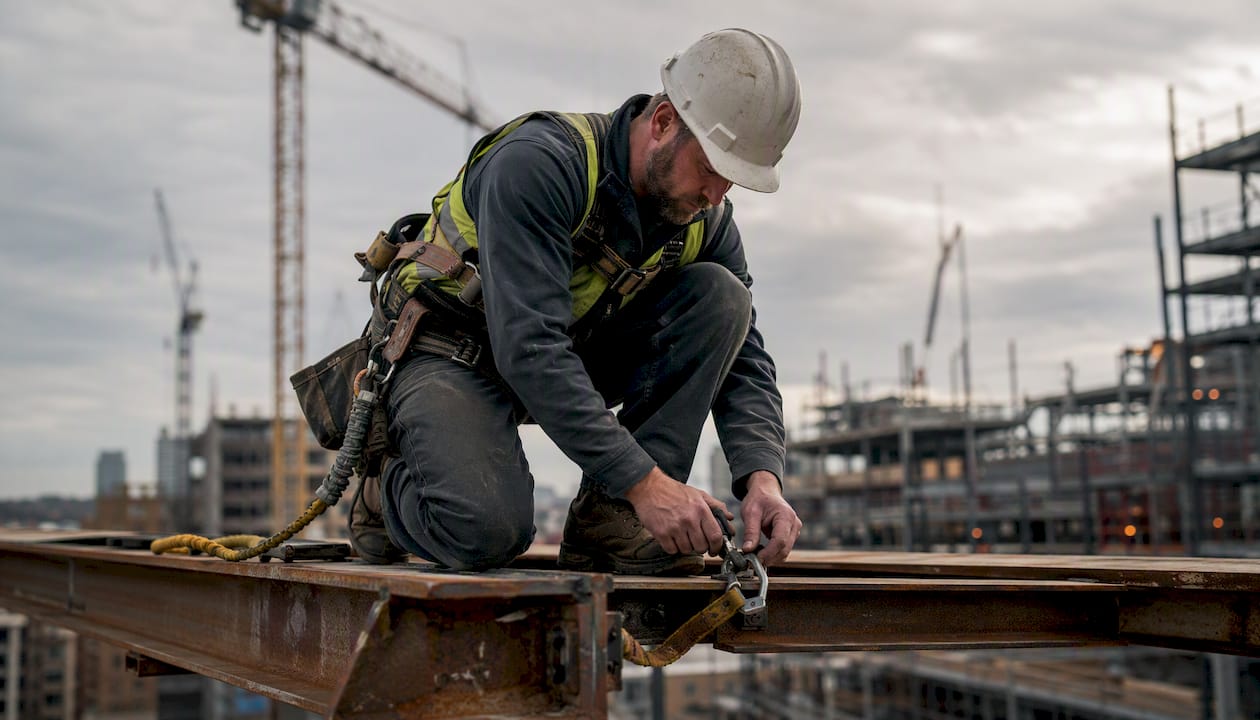
OSHA construction compliance means meeting the specific duties the Occupational Safety and Health Administration places on construction employers under 29 CFR 1926, plus the recordkeeping and reporting obligations in 29 CFR 1904. That’s the whole definition in one sentence. Everything else in this guide is about what that actually looks like on a jobsite Monday morning.
If you run crews, manage a site, or own a construction company, you don’t need a legal seminar. You need to know what to fix today, this week, and this quarter. Here’s the short version before the long one.
Do these things immediately if you haven’t already:
- Designate a competent person for each crew or task with the authority to identify hazards and stop unsafe work, per 29 CFR 1926.
- Confirm fall protection is in place for anyone working at or above the height where OSHA requires fall protection, since falls remain the single largest cause of construction fatalities according to OSHA’s Quick Start guidance.
- Post the required OSHA workplace poster where employees can see it.
- Verify your team knows the reporting clock: fatalities within 8 hours, hospitalizations or amputations within 24 hours, per 29 CFR 1904.39.
Keep these three sources bookmarked, because you’ll reference them constantly:
- 29 CFR 1926 — the actual construction standard text.
- 29 CFR 1904 — recordkeeping and reporting rules.
- OSHA’s Construction Industry Quick Start — a plain-language walkthrough of what to build first.
The rest of this guide walks through each piece: which standards apply, how inspections actually unfold, what gets cited most often, and how to build a program that survives contact with a real OSHA officer.
Key Takeaways
Meeting OSHA construction compliance standards requires a documented competent person, active fall protection, on-time incident reporting, and training your crew genuinely understands.
| Point | Details |
|---|---|
| Assign a competent person | Formally designate and document who has the authority to identify and correct hazards on each task. |
| Prioritize fall protection | Provide guardrails, nets, or fall arrest systems anywhere work happens six feet or higher. |
| Meet reporting deadlines | Report fatalities within 8 hours and hospitalizations, amputations, or eye loss within 24 hours. |
| Keep records audit-ready | Maintain training logs, inspection tags, and exposure records for their full required retention periods. |
| Use field software to stay current | Platforms like CHERP and SiteComm tie daily logs and training records to crew workflows so documentation stays current between inspections. |
Table of Contents
- What OSHA Construction Standards Actually Apply To Your Site?
- Quick-Start Checklist To Bring A Jobsite Into Compliance
- What Should A Written Safety And Health Program Include?
- What Training Does OSHA Require For Construction Workers?
- How Do OSHA Inspections Work On Construction Sites?
- What Are OSHA’s Recordkeeping And Reporting Deadlines?
- What Are The Most Frequently Cited OSHA Construction Violations?
- How Do State Plans And OSHA Consultation Differ From Enforcement?
- Embedding OSHA Compliance Into Daily Field Operations
- How CHERP And SiteComm Turn Compliance Into A Daily Habit
- Where To Find Authoritative OSHA Compliance Resources
- Frequently Asked Questions
- Sources
What OSHA Construction Standards Actually Apply To Your Site?
Every construction employer in the U.S. operates under 29 CFR 1926, the dedicated standard OSHA wrote specifically for construction work. It’s a different rulebook from 29 CFR 1910, the general industry standard that covers offices, manufacturing plants, and warehouses. Some crossover exists: hazard communication, respiratory protection, and a handful of health standards borrow directly from 1910 language, so a site with chemical exposure or confined-space work may need to check both.
29 CFR 1926 breaks into subparts, and most day-to-day compliance work touches only a handful of them. You don’t need to memorize the whole thing. You need to know which subpart governs which task on your site and check it before, not after, someone gets hurt.
| Subpart | Covers | What it typically requires |
|---|---|---|
| M | Fall protection | Guardrails, safety nets, or personal fall arrest above six feet |
| L | Scaffolding | Proper erection, inspection, and access for scaffold users |
| P | Excavation and trenching | Protective systems for trenches five feet deep or more |
| CC | Cranes and derricks | Operator certification, inspection, and assembly/disassembly rules |
| AA | Confined spaces in construction | Permit systems, atmospheric testing, rescue planning |
| Z | Silica and toxic substances | Exposure limits, dust control, medical surveillance |
| I | PPE | Head, eye, foot, and hand protection matched to task hazards |
The most frequently cited construction violations, including fall protection, scaffolding, ladders, and electrical safety, all trace back to specific subparts within 1926. That’s not a coincidence. These are the hazards that kill and maim people most often, which is exactly why OSHA wrote detailed rules for them and why inspectors check them first.
A few things worth knowing before you go digging through the regulation text yourself:
- The full text lives at Cornell’s Legal Information Institute, which mirrors the official Code of Federal Regulations.
- Interpretation letters, where OSHA clarifies how a standard applies to a specific scenario, carry real weight in enforcement and are worth searching if your situation is unusual.
- The Construction Industry Digest condenses the most commonly used standards into a single reference document, and it’s a far faster read than the raw CFR.
Quick-Start Checklist To Bring A Jobsite Into Compliance
Getting a site compliant doesn’t happen in one afternoon, but you can close the biggest gaps faster than you’d think if you work through them in the right order. This sequence follows OSHA’s own Quick Start logic: identify leading hazards first, then build the paperwork and training around them.
- Name a competent person for every active task. This takes minutes if you already have qualified supervisors on site. Document who holds the role and for which task.
- Walk the site for fall hazards. Check every edge, opening, and elevated platform. Fix or flag anything above six feet with no protection before the day ends.
- Inspect scaffolds and ladders in use today. Confirm current inspection tags exist and match what’s actually erected on site.
- Verify electrical isolation procedures. Lockout/tagout should be visible and understood by anyone working near live circuits or de-energized equipment.
- Confirm hazard communication is current. Safety data sheets should be accessible, and containers should be labeled.
- Check confined space procedures if applicable. Permits, atmospheric testing logs, and rescue plans need to exist before anyone enters.
- Review your emergency action plan. Every crew should know evacuation routes and assembly points, not just the superintendent.
Each step generates paperwork you’ll want later, whether an inspector shows up or not:
- Training records showing who was trained on what, and when.
- Inspection logs for scaffolds, ladders, and cranes.
- Equipment certification records, especially for cranes and hoists.
- Hazard communication documentation, including SDS access logs.
- Emergency plan acknowledgments signed by crew members.
Pro Tip: Don’t treat this checklist as a one-time event before an audit. Run a condensed version of it every morning during crew sign-in, because site conditions change daily and yesterday’s clean scaffold inspection doesn’t cover today’s added load.
What Should A Written Safety And Health Program Include?
OSHA doesn’t hand you a template for a written safety and health program, but its Recommended Practices for Safety and Health Programs in Construction lays out the core elements that show up in every effective program. Build around these seven pieces:
- A written policy statement that names who’s accountable for safety at every level, from owner to foreman.
- Hazard identification procedures that get run before work starts, not after an incident.
- Hazard control methods, prioritized in the order engineering controls, then administrative controls, then PPE.
- Training records tied to specific tasks and hazards, not generic annual sessions.
- Incident investigation procedures that document root cause, not just what happened.
- Recordkeeping systems that satisfy 1904 requirements without becoming a filing nightmare.
- Periodic program evaluation, because a program written in 2022 rarely matches a site running in 2026.
The competent person sits at the center of most of this. Under 29 CFR 1926.20(b), this designation is mandatory: the person must be capable of identifying existing and predictable hazards and must have authority to correct them immediately. That authority piece matters. A “competent person” title with no power to stop work or order a fix is a compliance gap dressed up as a job title.
OSHA generally doesn’t mandate a fixed inspection frequency for every hazard category, but effective programs run daily walk-throughs for high-risk tasks like excavation and scaffolding, not weekly ones. Waiting a week to catch a shifted trench wall is waiting too long.
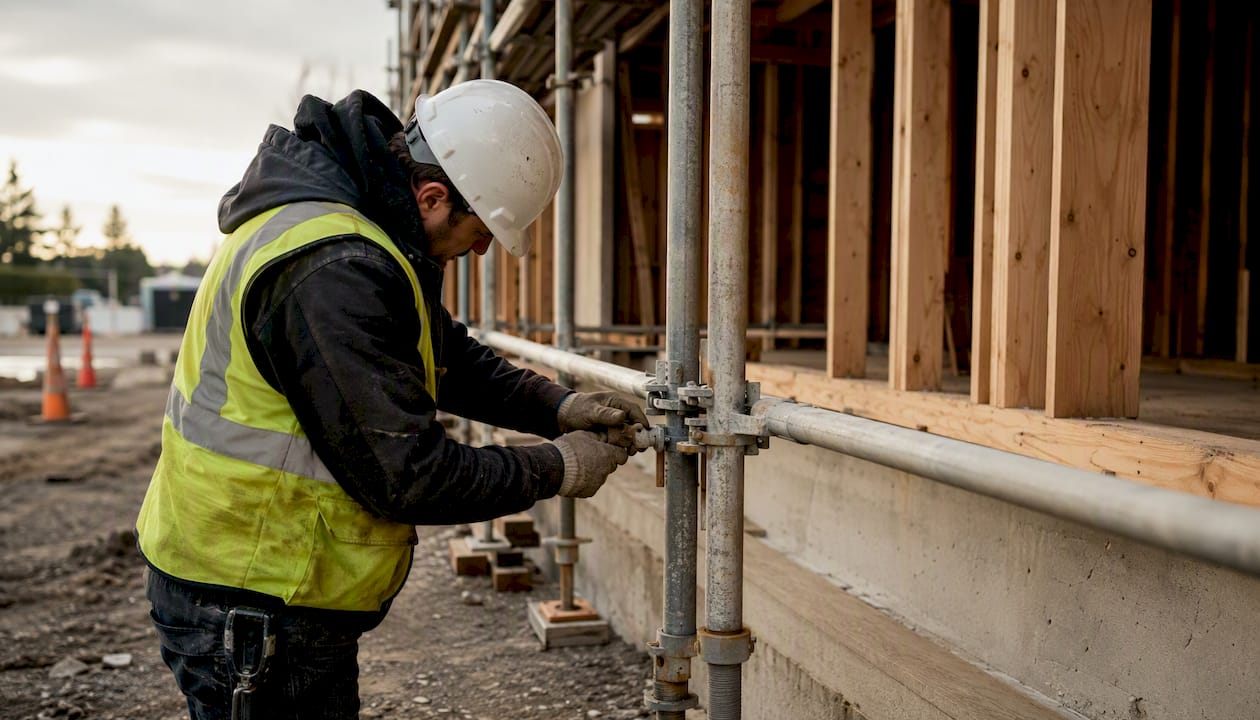
Multi-employer sites complicate all of this. A general contractor typically holds overall site safety responsibility, but subcontractors and staffing agencies bring their own crews, equipment, and hazards onto the same footprint. Coordination means the general contractor’s program needs to specify how subcontractor safety data gets collected, verified, and merged into the site-wide picture, not left as a separate binder nobody cross-checks.
Pro Tip: Keep one master document that tracks which subcontractor is responsible for which hazard category on a shared site. When an inspector asks who owns fall protection compliance in a specific zone, “check with the sub” is not an answer that ends well.
What Training Does OSHA Require For Construction Workers?
Training obligations run throughout 29 CFR 1926, but 1926.21 sets the baseline: employers must instruct employees to recognize and avoid unsafe conditions specific to their work. That’s a broad requirement, and it gets narrower fast once you layer in subpart-specific training mandates for scaffolding, excavation, confined spaces, and crane operation.
The part employers underestimate is the language and comprehension requirement. Training must be delivered in a language and vocabulary each employee actually understands, and OSHA enforcement looks for evidence of comprehension, not just proof that a session happened. A signed attendance sheet in English doesn’t help if half your crew works primarily in Spanish and didn’t follow the content.
Verification methods that hold up:
- Return demonstration, where the worker physically shows they can perform the task safely.
- Short quizzes or oral checks conducted in the worker’s primary language.
- Supervised task performance during the first shift on a new hazard, with a competent person watching.
Training that only lives in an annual classroom session tends to fade fast on a jobsite where the actual hazards change daily. The stronger approach threads training into routine workflows:
- Toolbox talks, five to ten minutes at the start of a shift, tied to that day’s specific tasks rather than a generic rotating topic list.
- Onboarding procedures that pair new hires with an experienced crew member for the first several days on any new hazard category.
- Role-based task checks before someone operates equipment or works in a new area for the first time.
Outreach programs, specifically OSHA’s 10-hour and 30-hour construction courses, aren’t mandated by federal OSHA for every worker, though many states, contracts, and unions require them. They cover the standards most likely to cause injury and give workers a documented baseline that’s useful during audits and new-hire screening.
How Do OSHA Inspections Work On Construction Sites?
OSHA inspections are unannounced and follow a strict priority order, which means the worst time to think about compliance is after you spot the inspector’s vehicle in the parking lot. The priority hierarchy runs like this:
- Imminent danger situations get inspected first, meaning any hazard likely to cause death or serious harm right away.
- Fatalities and hospitalizations trigger a mandatory inspection following the report.
- Employee complaints and referrals from other agencies come next.
- Targeted inspections focus on industries or hazards with historically high injury rates, and construction sits high on that list.
- Follow-up inspections verify that previously cited hazards actually got fixed.
The inspection itself typically runs through three stages. The opening conference is where the compliance officer explains the reason for the visit and you can ask to see credentials. The walkaround is the physical inspection, and you have the right to accompany the officer and take your own notes and photos as they do. The closing conference covers what the officer found, though formal citations usually arrive by mail afterward, not on the spot.
Have these documents ready before you ever need them, not scrambled together during the walkaround:
- Written safety and health program.
- Training records with dates, topics, and attendee names.
- Equipment inspection and maintenance logs.
- OSHA 300 log and 300A summary, if your establishment size requires one.
- Competent person designations for active tasks.
- Hazard communication program and safety data sheets.
If a citation does land, you have the right to request an informal conference with the OSHA area director to discuss the finding, or to formally contest it within 15 working days of receipt. Many citations get resolved or reduced during that informal conversation, particularly when the employer shows immediate corrective action.
What Are OSHA’s Recordkeeping And Reporting Deadlines?
The reporting clock is the single most unforgiving part of OSHA construction compliance, because missing a deadline is its own violation separate from whatever caused the incident. Report a work-related fatality to OSHA within 8 hours. Report an inpatient hospitalization, amputation, or loss of an eye within 24 hours. These deadlines apply regardless of your company’s size or whether the injured party is your direct employee or a subcontractor’s worker on your site.
Recordkeeping under 29 CFR 1904 is broader than just the incidents that require immediate reporting. Employers with more than ten employees generally must maintain an OSHA 300 log recording work-related injuries and illnesses that meet specific criteria, such as requiring medical treatment beyond first aid, days away from work, or restricted duty. Some low-hazard industries are exempt from routine recordkeeping, though construction generally is not one of them.
Establishments that meet certain size and industry thresholds must submit injury and illness data electronically through OSHA’s Injury Tracking Application. Whether that applies to your company depends on your establishment size and NAICS code, so check current ITA requirements against your specific classification rather than assuming either way.
Different records carry different retention clocks, and getting this wrong either means destroying something you needed or hoarding paperwork you didn’t:
| Record type | Retention period |
|---|---|
| OSHA 300 log and 300A summary | 5 years following the end of the calendar year they cover |
| Exposure records | 30 years |
| Medical records | Duration of employment plus 30 years |
| Training records | No fixed federal minimum, but keep for the duration of the employee’s exposure to the relevant hazard plus several years |
These retention periods for exposure and medical records come straight from OSHA guidance and they surprise a lot of employers who assume five years covers everything. It doesn’t. If your crew works around silica, lead, or asbestos, that exposure record needs to survive long after the project itself is a memory.
What Are The Most Frequently Cited OSHA Construction Violations?
OSHA publishes lists of frequently cited construction standards, and the pattern barely shifts year to year because the underlying hazards don’t change. Here’s the lineup and what actually fixes each one:
- Fall protection (general requirements). Install guardrails, safety nets, or personal fall arrest systems anywhere work happens six feet or higher above a lower level. Don’t wait for a specific task assignment; if the elevation exists, the requirement exists.
- Scaffolding. Run a documented inspection before each shift a scaffold is used, and keep the inspection tag current and visible.
- Ladders. Train every worker on proper ladder selection, angle, and three-point contact, and pull damaged ladders from service immediately rather than “for now.”
- Fall protection training. Fix this by pairing physical fall protection equipment with documented, comprehension-verified training, not just equipment issuance.
- Eye and face protection. Match protective eyewear to the specific task, since grinding and welding require different protection than general debris exposure.
- Head protection. Enforce hard hat use in any area with overhead work or falling object risk, and replace hats after any impact.
- Excavation and trenching (general requirements). Never let anyone enter a trench five feet deep or more without a protective system in place.
- Hazard communication. Keep safety data sheets current and accessible, and label every container correctly, including secondary containers.
- Respiratory protection, including silica exposure. Use wet cutting methods or vacuum dust collection systems, and provide medical surveillance where exposure limits require it.
- General PPE requirements. Conduct a hazard assessment for each task and match PPE to the actual exposure, not a generic kit issued regardless of job.
A short daily supervisor checklist built around this list looks something like: confirm fall protection at every elevated work area, check scaffold tags, verify ladder condition, and spot-check PPE compliance at crew sign-in. That five-minute walk catches most of what shows up on a citation report.
How Do State Plans And OSHA Consultation Differ From Enforcement?
Roughly half the states run their own OSHA-approved state plans instead of relying solely on federal OSHA enforcement, and these state plans can set requirements that are more strict than federal standards, though never less protective. If you operate in a state-plan state, check that state’s specific construction standards before assuming the federal 1926 text is the final word. States like California and Washington, for example, layer additional requirements onto certain construction hazards.
Separate from all enforcement activity, OSHA runs a free On-site Consultation Program specifically for small and medium-sized businesses that want help identifying hazards before an inspector ever shows up. Consultation is confidential and entirely separate from OSHA’s enforcement arm. Nothing observed during a consultation visit gets reported to enforcement staff, and no citations or penalties result from what the consultant finds.
Requesting a consultation typically follows this path:
- Contact your state’s consultation program office, usually through the state labor department or a state university partnership.
- Schedule a visit, which usually happens within a few weeks depending on regional demand.
- The consultant reviews your written safety program, walks the site alongside your safety lead, and reviews training and inspection records.
- You receive a report identifying hazards and recommended corrective actions with a reasonable timeframe to fix them.
The tradeoff is that if the consultant finds a serious hazard, you’re expected to correct it. But you’re not exposed to fines the way you would be with a compliance officer, which makes it one of the lowest-risk ways to find out where your program actually has holes.
Embedding OSHA Compliance Into Daily Field Operations
Most compliance programs fail for a boring reason: they live in a binder nobody opens between audits. The contractors who avoid repeat citations treat safety as something that happens during the workday, not something that gets reviewed before one.
Tie your safety checklist to daily sign-in instead of running it as a separate administrative task. When a worker checks in for the shift, that’s the moment to confirm they’ve reviewed the day’s specific hazards, not a form filled out three days later from memory. Assign the competent person role explicitly within your crew hierarchy so there’s no ambiguity about who has the authority to halt work on a given task, and make that assignment visible to the whole crew, not just documented in a file somewhere.
Pre-task briefings work better when they’re specific to that day’s actual hazards rather than a rotating generic topic list. A five-minute conversation about the trench depth changing after yesterday’s rain beats a scheduled talk about ladder safety when nobody’s using a ladder that day.
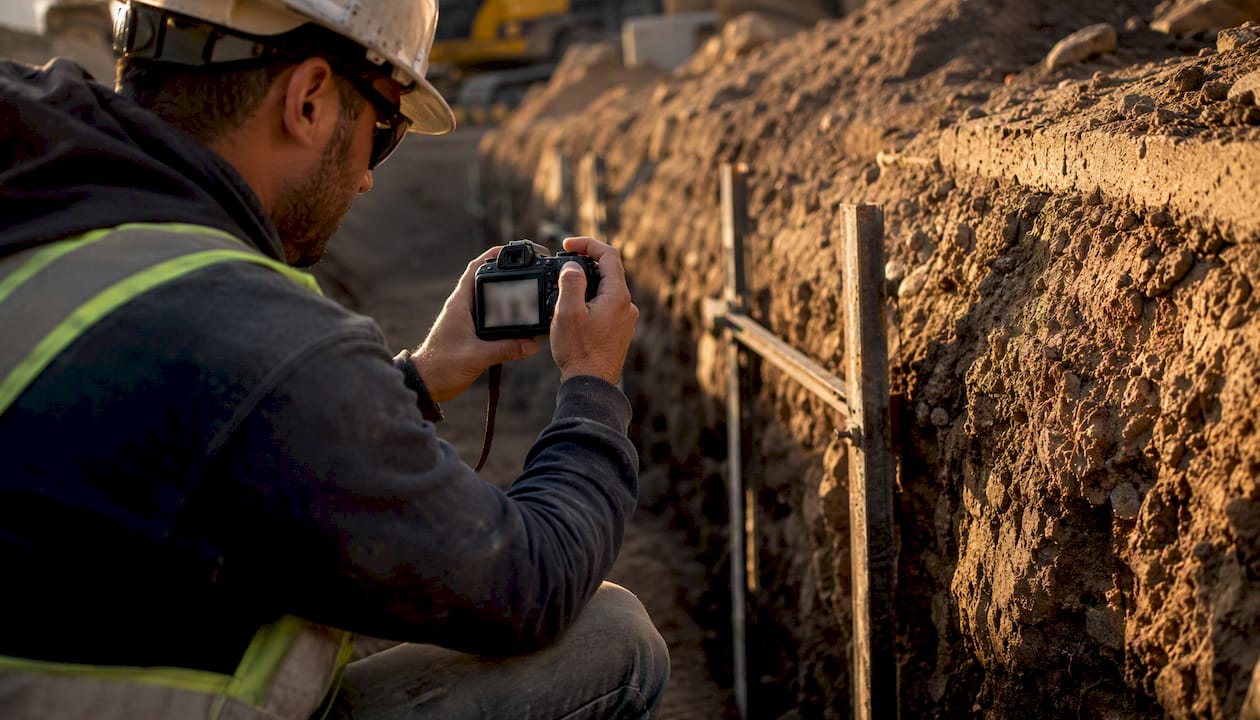
Pro Tip: Photograph completed corrective actions the same day you fix them. A picture of the newly installed guardrail with a timestamp is worth more during a follow-up inspection than a verbal assurance that “we took care of it.”
Build a worker feedback loop into your routine rather than treating hazard reports as complaints. Site-specific, frequently updated checklists catch conditions that static monthly forms miss entirely, because trench walls shift, scaffold loads change, and material staging moves. The contractors who consistently pass unannounced inspections aren’t the ones who scramble the week before; they’re the ones who never stopped checking. Moving from a compliance checkbox mentality to a continuous loop, hazard identification, immediate correction, documentation, review, and repeat, is what separates a program that survives an audit from one that only looks good on paper.
How CHERP And SiteComm Turn Compliance Into A Daily Habit
Debecorp built CHERP and SiteComm around a simple problem: OSHA compliance dies in binders and gets rebuilt in a panic before an audit. Everything covered above, competent person assignments, training documentation, daily inspection logs, incident reporting, works better when it’s part of how your crew already clocks in and communicates, not a separate system nobody remembers to update.

CHERP handles time and attendance alongside daily logs and safety compliance tracking, so a shift sign-in doubles as a hazard checklist without adding a second app to your day. Crew hierarchy features let you formally assign and display the competent person for each task, exactly the kind of documented authority OSHA expects under 1926.20(b). SiteComm keeps toolbox talks, hazard alerts, and crew feedback in one running record instead of scattered across text threads that vanish when someone changes phones. When an inspector asks for training records or a competent person designation, the answer lives in the system already, not in someone’s memory from three weeks back.
If your current process depends on paper checklists or a folder of scanned forms, explore what CHERP and SiteComm can do for your crew and see how a demo maps directly onto the program elements OSHA actually checks for.
Where To Find Authoritative OSHA Compliance Resources
Bookmark these before you need them during an inspection, not while one is happening.
- 29 CFR 1926 — Safety and Health Regulations for Construction: the complete construction standard text, organized by subpart.
- 29 CFR 1904.39 — Fatality or multiple hospitalization incidents: the specific reporting rule with exact timelines and covered events.
- Compliance Assistance Quick Start for Construction: OSHA’s own stepwise walkthrough for building a compliant program from scratch.
- Construction Industry Digest: a condensed reference covering the most commonly used construction standards in plain language.
- Recommended Practices for Safety and Health Programs in Construction: OSHA’s model for building and evaluating a written safety program, including sample structures.
- Construction Industry Compliance page: enforcement memos, inspection scheduling policy, and updated lists of frequently cited standards.
For teams looking to tighten the operational side of compliance, resources like a mobile safety checklist built for field workers or a guide to onboarding new hires effectively cover the documentation habits that make the difference between a program that exists on paper and one that holds up during a real walkaround.
This article provides general information about OSHA construction requirements and does not substitute for legal advice. Confirm current standards and state-specific requirements with OSHA directly or a qualified safety professional before making compliance decisions.
Frequently Asked Questions
What is the core requirement for OSHA construction compliance? Employers must follow the standards in 29 CFR 1926, maintain accurate records under 29 CFR 1904, and correct recognized hazards even where no specific standard applies, under the OSH Act’s General Duty Clause.
How quickly must a workplace fatality be reported to OSHA? Within 8 hours of the employer learning about the fatality. Inpatient hospitalizations, amputations, and loss of an eye must be reported within 24 hours.
What is the most frequently cited OSHA construction violation? Fall protection violations consistently top the list, followed by scaffolding, ladders, and hazard communication issues, according to OSHA’s enforcement data.
Does OSHA On-site Consultation result in fines? No. Consultation is separate from enforcement and confidential, though you’re expected to correct any serious hazards the consultant identifies within an agreed timeframe.
Do state OSHA plans change compliance requirements? Yes, in states running their own approved plans. State standards can exceed federal requirements but never fall below them, so check your specific state’s construction rules if you operate there.
This article is general information, not a substitute for advice from a qualified lawyer. Consult a qualified legal professional about your own circumstances before acting on anything here.
Sources
- 29 CFR 1904.39 — Fatality or multiple hospitalization incidents
- 29 CFR 1926 — Safety and Health Regulations for Construction
- Construction Industry Digest (OSHA Publication OSHA 2202)
- Compliance Assistance Quick Start - Construction Industry | Occupational Safety and Health Administration
- Recommended Practices for Safety & Health Programs in Construction (OSHA)
- Construction Industry - Compliance | Occupational Safety and Health Administration